Best Wheelbarrow for Mixing Concrete by Drum Size

Six wheelbarrow-style concrete mixers compared on drum capacity, motor wattage, weight and footprint, with a named winner and the conditions that flip it to a bigger drum or a lighter frame.

By Colette SalinasUpdated 18 min read
On this page
- Best wheelbarrow for mixing concrete at a glance
- How I screened these six mixers
- Why a plain wheelbarrow struggles with concrete
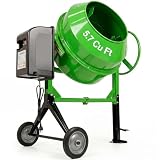
- 1. BILT HARD Electric Cement Mixer — Best overall
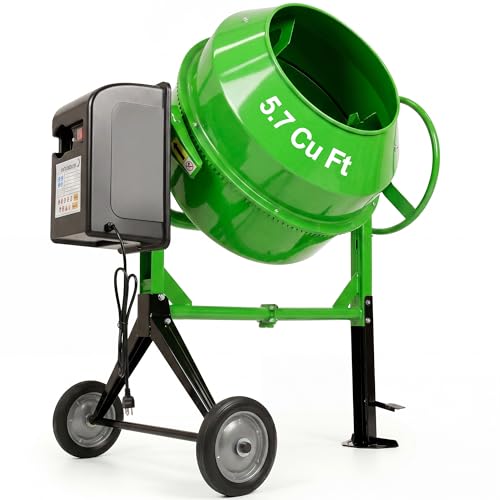
- 2. Lavoker Electric Concrete Mixer 5.7 Cu Ft 160L Power — Best upgrade
- 3. Dkenicor Electric Cement Mixer — Best premium
- 4. PHLEX PRO 5.3 Cu. Ft. Portable Cement Mixer — Best minimal setup
- 5. SPECRAFT Electric Cement Mixer — Most versatile
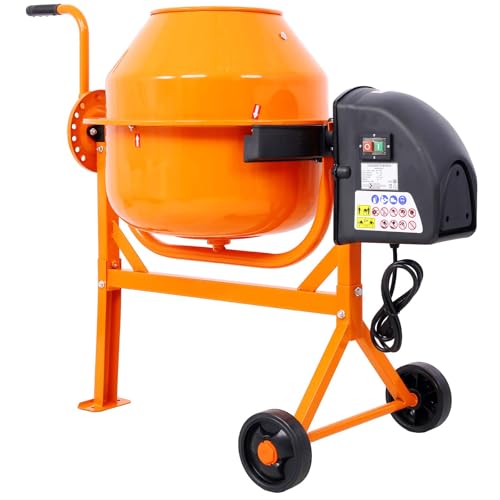
- 6. FTOPBTB Electric Cement Mixer — Best budget pick
- How big a drum do you actually need?
- What does more wattage buy you here?
- Steel drum or polymer drum: which cleans up better?
- What the listings do not tell you
- The verdict
- FAQ
The best wheelbarrow for mixing concrete is the BILT HARD Electric Cement Mixer, because its 4 cu ft drum and 550W motor cover typical DIY pours while the whole unit weighs 90.4 lb, light enough to wheel across a lawn. If you need bigger batches, the Lavoker Electric Concrete Mixer steps up to a 160L drum. Get this choice wrong and you find out the hard way: a hand-mixed batch that stiffens in the tray before you've screeded the last of it, and a slab with a cold joint through the middle.
Best wheelbarrow for mixing concrete at a glance
| Pick | Drum capacity | Motor | Price |
|---|---|---|---|
Best overall BILT HARD Electric Cement Mixer |
4 cu ft | 550W claim | Check Price |
Best upgrade Lavoker Electric Concrete Mixer |
160L (5.7 cu ft) | 650W claim | Check Price |
Best premium Dkenicor Electric Cement Mixer |
5.3 cu ft | 750W claim | Check Price |
Best minimal setup PHLEX PRO Portable Cement Mixer |
5.3 cu ft | 750W claim | Check Price |
Most versatile SPECRAFT Electric Cement Mixer |
4.9 cu ft (140L) | 375W claim | Check Price |
Best budget pick FTOPBTB Electric Cement Mixer |
3 cu ft | 550W claim | Check Price |



How I screened these six mixers
I started from the listings in the Concrete Mixers category and compared the published specifications side by side. Six survived. Every one of them uses a wheelbarrow-style frame with two wheels and a handle, which is the shape most people picture when they search for a mixing barrow.
Here's what I lined up for each one:
- Published drum capacity, in cubic feet or litres, since that sets your batch size.
- Motor wattage, as claimed by the manufacturer, plus drum speed where it was stated.
- Total weight, because you have to move the thing before you can use it.
- Overall dimensions, which decide whether it fits through your gate and lives in your garage.
- Drum material, steel or polymer, which changes cleanup and dent resistance.
What got cut: anything with no stated drum capacity, and anything where the frame was a fixed stand rather than a wheeled barrow. That leaves a set spanning 3 cu ft to 5.7 cu ft and 375W to 750W of claimed motor power. Three of the six publish a weight. Two publish neither weight nor a full dimension set, and I've flagged that in their sections, because ordering a 5.3 cu ft machine blind is how you end up with something that won't clear a doorway.
Why a plain wheelbarrow struggles with concrete
The search phrase says wheelbarrow, and the honest answer is that a plain steel-tray barrow is a poor mixing vessel. It can be done. A tray, a mixing hoe and a strong back will get a bag of ready-mix wet. What it won't do is get it evenly wet, and unmixed pockets of dry cement are exactly where a slab cracks first.
Three problems compound:
- Corners. A tray has square-ish corners that a hoe can't reach cleanly, so dry material hides there.
- Time. Concrete starts setting from the moment water hits it. Hand-mixing a big batch eats your working window.
- Volume. Half a bag is manageable. Three bags in a barrow tray is a mess that spills over the sides.
That's why every pick here is a wheelbarrow-style mixer: the same two-wheel-and-handle frame, but with a powered rotating drum in place of the tray. You get the mobility of a barrow and a drum that actually folds the mix over on itself. Note the qualifier, though. If what you specifically want is a non-powered barrow tray you can also mix in, none of these six is that product, and Amazon's search results for this phrase return powered mixers instead. Judge that trade-off yourself before you buy. If you own a barrow already, one of these mixers plus your existing barrow to carry the wet mix is the usual setup.
1. BILT HARD Electric Cement Mixer — Best overall
A 4 cu ft drum on a 90.4 lb frame is the sweet spot for DIY pours, and it's the second-cheapest pick here.
Best for: DIY slabs and footings where you mix a batch, pour, and repeat. Skip it if: you need more than 4 cu ft in a single batch.
Two numbers make this the default recommendation in the best wheelbarrow for mixing concrete category. First, 90.4 lb: it's the second-lightest of the six and the lightest that also carries a drum over 3 cu ft. Second, the price position, second-cheapest of the six, which is unusual for a 4 cu ft machine in this set. BILT HARD says the motor is 550W at 120V and 5A, with drum rotation quoted at 26 RPM, and lists a 4 cu ft (roughly 113L) maximum drum volume.
The frame measures 52.4 x 47.2 x 27.5 in, which is longer than most but only 27.5 in across, so it clears a standard 30-inch gate. BILT HARD describes a mix of cast metal and steel components with a powder-coat finish on drum and frame, and a steel handle using an iron ring and safety lock for tilt adjustment. Two 9-inch wheels handle transport.
It also sells faster than the rest of this set, and two sellers list it, which is more choice than the single-seller picks below. The trade-off is capacity. The Lavoker and both 5.3 cu ft picks give you a bigger drum, so if your pour is measured in cubic yards rather than bags, you'll be doing more batches here.
Pros:
- 4 cu ft drum, the middle of this set's range
- 90.4 lb, lightest of the mixers above 3 cu ft
- Second-cheapest of the six
- Full dimensions and weight both published
- The one buyers choose most often here
Cons:
- Smaller drum than four of the other five picks
- 550W claim is mid-pack, not the strongest here
- 52.4 in length needs real storage depth
- No stated warranty in the listing
2. Lavoker Electric Concrete Mixer 5.7 Cu Ft 160L Power — Best upgrade
The biggest drum in this set at 160L, with the tightest footprint of any mixer above 4 cu ft.
Best for: bigger pours where fewer batches matter more than a light frame. Skip it if: you need a published weight before you buy.
At 160L, this is the largest drum of the six, and the listing breaks that down usefully: 160L total, 115L dry, 95L wet. That distinction matters more than the headline figure. A drum only mixes properly at partial fill, so the wet number is the one that governs your real batch size. Lavoker quotes a 650W copper motor at 0.9HP running at 2800 RPM, though the same feature text also says 600W, so treat the wattage as approximate marketing copy rather than a settled figure.
The frame is 47.2 x 47.2 x 25.6 in, the shortest overall footprint of any pick above 4 cu ft here, so the extra drum volume doesn't cost you garage space. Lavoker describes a spring-loaded tilting disc with a safety lock and 360-degree drum rotation, heavy-duty steel with a powder-coated finish, and two 9-inch wheels it says one person can move.
It sits mid-range for this set on price, third-cheapest of the six. The gap against the winner is what the listing leaves out: no published weight, and the internal wattage contradiction. One seller lists it, and it's among the slowest sellers here.
Pros:
- 160L drum, the largest of the six
- Publishes dry and wet fill volumes, not just total
- 47.2 in square footprint, tightest above 4 cu ft
- Spring-loaded tilt with safety lock claimed
- Mid-range price for the biggest drum here
Cons:
- No published weight anywhere in the listing
- Feature text quotes both 650W and 600W
- Only one seller stocks it
- Among the slowest sellers of the six
3. Dkenicor Electric Cement Mixer — Best premium
A 750W claim, a steel drum and the smallest published footprint here, at the highest price position of the six.

Best for: long sessions where a 750W motor and a steel drum earn their keep. Skip it if: the highest price position in this set is a problem.
This is the most expensive pick here, and the case for it rests on two published details. Dkenicor claims a 750W copper-core motor at 1HP turning the drum at 30 RPM, the highest quoted wattage in the set alongside the PHLEX PRO. And the drum is described as thick high-strength steel, resistant to pressure, cracking and rust, where the PHLEX PRO at the same 5.3 cu ft capacity uses polymer.
The dimensions are the quiet win: 35 x 50 x 19 in. That 19-inch width is the narrowest published figure of any pick here, which matters if your only route to the back garden is a side passage. Compare that to the SPECRAFT, whose listed dimensions are far bulkier. Colour is orange. Model number is KF100322US-02MLHC-001.
Odd detail worth naming: the feature text refers to a SILVEL wheelbarrow-style mixer, and the model number matches the PHLEX PRO's exactly. These two picks are very likely the same underlying machine with different drum materials claimed. Given that, the Dkenicor's argument over the PHLEX PRO is the steel drum and the published dimensions, and against the winner it's raw drum size for a much higher price.
Pros:
- 750W and 1HP claim, joint highest here
- Steel drum claimed, not polymer
- 19 in width, narrowest published in this set
- 5.3 cu ft drum, second-largest of the six
Cons:
- Highest price position of the six
- No published weight for a 5.3 cu ft machine
- Feature copy references a different brand name
- Only one seller lists it
4. PHLEX PRO 5.3 Cu. Ft. Portable Cement Mixer — Best minimal setup
A polymer drum PHLEX PRO says is a breeze to clean, on a 5.3 cu ft frame with a 750W motor claim.

Best for: someone who wants the easiest cleanup and a large drum. Skip it if: you want published dimensions and weight before ordering.
Cleanup is the job nobody plans for and everybody regrets. Cured concrete bonded to a drum wall is a chisel job, and it gets worse every time you skip it. PHLEX PRO's answer is a drum made of thick polymeric material, which the brand says resists dents, cracks and rust and is a breeze to clean after use. Polymer flexes, so a hardened lump tends to pop free rather than grip. That's the single clearest differentiator among the four large-drum picks in this set.
The rest reads like the Dkenicor because the model number is identical: 750W copper-core motor at 1HP, 30 RPM, 5.3 cu ft drum, orange, wheelbarrow-style frame, all hardware and a manual included. The size field lists "5.3 Cu.Ft-Update" and nothing more.
It's the second-most-expensive pick here and sells faster than every pick except the winner. What holds it back is a thin specification sheet: no dimensions, no weight, no colour beyond orange. For a machine this size, ordering without a footprint figure is a real gamble. And polymer trades dent resistance for the abrasion resistance steel gives you over years of gravel mixes.
Pros:
- Polymer drum claimed to clean easily
- 750W and 1HP claim, joint highest here
- 5.3 cu ft drum, second-largest of the six
- Second-fastest seller in this set
Cons:
- No published dimensions or weight at all
- Second-highest price position of the six
- Polymer is less abrasion-resistant than steel long term
- Only one seller lists it
5. SPECRAFT Electric Cement Mixer — Most versatile
A 4.9 cu ft steel drum with a 22.4-inch opening, aimed at concrete, mortar, stucco and farm work alike.

Best for: mixed-use mixing across concrete, mortar and farm feed. Skip it if: you have a tight garage or a narrow gate.
The drum opening is what earns this one its label. SPECRAFT publishes a 22.4-inch mouth on the 4.9 cu ft (140L) steel drum, the only opening figure anyone in this set states. A wide mouth is how you get a shovel and a bag in without spilling half of it down the outside, and it's what makes the same machine practical for feed and seed as well as concrete. The listing describes a smooth interior meant to handle heavy or dry material without clogging.
Construction is quoted as reinforced Q235 steel with a rust-resistant coating, and setup as plug-and-play at 110V with a control panel and reinforced wiring. Weight is 103.8 lb, the heaviest published figure here. Colour is orange, model CME001, described as a dolly cart type frame.
Two things count against it. The motor claim is 375W at 29.5 RPM, the lowest wattage of the six by a wide margin, which is a lot of drum for not much power. And the listed dimensions are 80 x 120 x 63 in, an enormous footprint next to the winner's 27.5-inch width. Whether that's shipping carton or assembled machine isn't stated, but either way it's the one figure that should make you measure your gate first.
Pros:
- 22.4 in drum opening, the only one published here
- 4.9 cu ft steel drum, third-largest of the six
- Q235 steel and rust-resistant coating claimed
- Published weight and model number
Cons:
- 375W claim, lowest wattage in the set
- Listed dimensions are far bulkier than any rival here
- 103.8 lb, heaviest published weight of the six
- Slowest seller of all six picks
6. FTOPBTB Electric Cement Mixer — Best budget pick
The cheapest and lightest pick here at 50 lb, with a 3 cu ft drum sized for repairs rather than slabs.
Best for: small repairs, post holes and fence footings. Skip it if: you are pouring a slab in one afternoon.
Weight is the whole argument. At 50 lb, this is 40 lb lighter than the winner and roughly half the SPECRAFT. That's the difference between a two-person lift into a pickup bed and a one-person one. It's also the cheapest of the six, so it's the low-commitment way into powered mixing if you're not sure how often you'll use it.
The drum is 3 cu ft gross, the smallest here, and FTOPBTB claims a 550W 1/3 HP motor at 120V/60Hz, matching the winner's wattage claim on a smaller drum. Frame dimensions are 36 x 49 x 21.5 in, the second-narrowest set published. Construction is described as a heavy-duty steel frame with a powder-coated surface, with the same iron-ring-and-safety-lock handle arrangement as the BILT HARD. The brand also pitches it for seed inoculation and feed mixing, model number Electric Cement Mixer0313, and includes 6-inch wheels.
Those 6-inch wheels are the honest weak point. Every other picked mixer that states a wheel size uses 9-inch, and smaller wheels dig into soft ground and stall on kerbs. Combined with the 3 cu ft drum, this is a mixer for buckets of mortar, not for a driveway.
Pros:
- Cheapest of the six picks
- 50 lb, the lightest here by 40 lb
- 550W and 1/3 HP claim on a small drum
- Full weight and dimensions published
Cons:
- 3 cu ft drum, smallest in the set
- 6-inch wheels, smaller than the 9-inch rivals
- Slowest-moving of the entry-priced picks
- Only one seller lists it
How big a drum do you actually need?
Drum capacity is the number that decides this purchase, and the mistake is reading it as batch size. It isn't. A drum has to be part-empty to tumble material, so your working batch is meaningfully less than the printed figure. Lavoker is the only brand here that spells this out: 160L total, 115L dry, 95L wet. Assume every other listing works the same way.
Rough guide by job:
- Post holes, fence footings, small patches. The 3 cu ft FTOPBTB is enough, and its 50 lb weight is worth more to you than volume.
- Path, small pad, steps, a few square yards. The winner's 4 cu ft drum. Mix, pour, repeat, and you keep pace with a single pair of hands.
- Slab or driveway section you want done in one session. 4.9 to 5.7 cu ft, so the SPECRAFT, both 5.3 cu ft picks, or the Lavoker.
The threshold worth remembering: past roughly 5 cu ft, batch count stops being your bottleneck and placement speed does. If you're mixing alone, a bigger drum just means concrete waiting in the barrel while you screed, and waiting concrete stiffens. That's why the 4 cu ft machine wins the general recommendation despite four rivals holding more.
What does more wattage buy you here?
Claimed motor power in this set runs from 375W to 750W, which sounds decisive and mostly isn't. Wattage moves the drum. Drum speed and drum size move the mix. Look at the stated RPM figures and the picture inverts: the 550W winner claims 26 RPM, the 375W SPECRAFT claims 29.5 RPM, and both 750W picks claim 30 RPM. Higher wattage here buys the ability to keep turning a heavier load without bogging, not faster mixing.
What that means practically:
- Stiff, low-slump mixes and heavy gravel are where a 750W claim earns its money, because the drum is fighting more mass.
- Standard bagged concrete and mortar don't stress a 550W motor at 4 cu ft.
- A big drum on a small motor is the combination to watch, and the 4.9 cu ft SPECRAFT on 375W is the one that raises the question in this set.
Treat all these figures as manufacturer claims, because that's what they are. None is an independently verified rating, and the Lavoker listing contradicts itself between 650W and 600W in the same paragraph. Wattage is a tie-breaker, not a first filter. Match the drum to the job, then check the motor isn't undersized for it.
Steel drum or polymer drum: which cleans up better?
Five of these six describe a steel drum. Only the PHLEX PRO claims polymer, and that single difference is the most useful split in the set once you get past capacity.
Steel is what the trade uses. It shrugs off gravel abrasion and holds its shape after years of knocks. The catch is that cement grabs steel, so a skipped rinse compounds into a chiselling session and eventually into a drum that holds noticeably less than it should.
Polymer flexes. PHLEX PRO says its drum resists dents, cracks and rust and is a breeze to clean, and the physics behind that is straightforward: a flexible wall lets hardened residue crack loose. The cost is abrasion resistance over long service.
Either way, the routine is the same and it takes five minutes:
- Tip out every last bit of the batch while it's still wet.
- Drop in a shovel of clean gravel and a few litres of water.
- Run the drum for two or three minutes, so the gravel scours the walls.
- Tip that out, rinse, and leave the drum tilted mouth-down to drain.
Do that after every session. Skip it twice and you've permanently reduced the machine you just paid for, whichever drum material it uses.
What the listings do not tell you
Three of these six publish a weight. Four publish dimensions, and one of those four gives a figure so large it's probably the shipping carton rather than the assembled frame. That's the state of the data, and it's worth knowing before you commit.
What's missing across the board:
- Warranty. Not one of the six listings states a warranty term. If cover matters, check the brand's own terms before ordering.
- Noise. No decibel figure anywhere. A steel drum with gravel in it is loud, and none of these tells you how loud.
- Drum wall thickness. Several say thick or heavy-duty steel. None gives a gauge.
- Tilt mechanism detail. BILT HARD and Lavoker describe locks and rings. The others say very little about how the drum holds its angle under load.
- Cord length. Every pick is corded mains power. None states the lead length, so budget for an outdoor extension.
Two picks share the model number KF100322US-02MLHC-001, and one of those two names a third brand in its own feature copy. That's not disqualifying, but it does mean brand loyalty carries less weight here than the specification sheet does. Where a listing gives you a weight and a footprint, that's a real advantage, and it's part of why the winner sits at number one.
The verdict
If you're a homeowner mixing paths, pads, steps and footings, the BILT HARD Electric Cement Mixer is the best wheelbarrow for mixing concrete in this set. A 4 cu ft drum, a 550W claim, 90.4 lb, and a 27.5-inch width that clears a normal gate. It's the second-cheapest here and the only pick that publishes weight, full dimensions and a wheel size while carrying more than 3 cu ft.
If you're pouring a slab section in one sitting, the Lavoker Electric Concrete Mixer is the better buy. Its 160L drum is the largest of the six, its 47.2-inch square frame is the tightest footprint above 4 cu ft, and it's the only listing that separates dry and wet fill volumes so you can plan real batch sizes.
The cutoff is roughly 4 cu ft of pour per session. Below it, capacity is not your constraint and a lighter, cheaper frame serves you better, which is where the 3 cu ft FTOPBTB at 50 lb makes sense. Above it, batch count starts costing you working time and the bigger drum pays for itself. The two 5.3 cu ft picks sit at the top of the price range, and the Dkenicor's steel drum against the PHLEX PRO's easier-cleaning polymer is the only meaningful choice between them.
FAQ
Is a wheelbarrow mixer worth it over hand mixing?
A wheelbarrow mixer is worth it the moment you're mixing more than two or three bags in a session. Hand mixing in a tray leaves dry pockets in the corners and eats your working window before the concrete sets. A powered drum folds the mix evenly and buys you time to place and finish properly.
What size drum do I need for a small slab?
For a small slab, a drum in the 4 to 5.7 cu ft range covers it. The BILT HARD's 4 cu ft suits a path or pad you pour in stages. For a slab section done in one session, the Lavoker's 160L drum is the largest here, and its listing usefully splits that into 115L dry and 95L wet working volume.
Does more motor wattage mean faster mixing?
More motor wattage mostly means holding drum speed under a heavier load, not faster mixing. Compare the stated RPM figures in this set: the 550W BILT HARD claims 26 RPM, the 375W SPECRAFT claims 29.5 RPM, and the 750W picks claim 30 RPM. Wattage matters for stiff, gravel-heavy mixes. It's a tie-breaker, not your first filter.
BILT HARD or Lavoker: which should I choose?
BILT HARD or Lavoker comes down to batch size against known dimensions. The BILT HARD publishes 90.4 lb and a 52.4 x 47.2 x 27.5 in frame, so you know it fits and you can move it. The Lavoker holds 160L versus 4 cu ft, but publishes no weight and quotes both 650W and 600W in the same feature text.
What is the biggest mistake buyers make with concrete mixers?
The biggest mistake buyers make is skipping the post-pour clean. Cured cement bonds to the drum wall, shrinking capacity permanently and forcing a chisel job later. Tip the batch fully, add gravel and water, run the drum two or three minutes, rinse, then store it mouth-down. The second mistake is buying capacity you can't place fast enough alone.
Measure two things before you order: the narrowest gap between your storage spot and your work area, and the volume of the biggest pour you realistically plan this year. Those two numbers pick your mixer faster than any specification comparison will. For most people the answer lands on the BILT HARD, because a 4 cu ft drum on a 90.4 lb, 27.5-inch-wide frame is the version of this machine you'll actually drag out for a Saturday job instead of leaving parked against the garage wall. A mixer you avoid moving is a mixer you stop using.