Best Ceramic Pizza Cutter When Drawer Space Is Tight

A ceramic blade resists rust and stays sharp, but only two of these six actually carry one. Here's which pizza cutter to buy, and when a steel wheel beats ceramic outright.

By Colette SalinasUpdated 15 min read
On this page
- Best ceramic pizza cutter at a glance
- How I scored these six against the ceramic promise
- 1. Peterson Housewares Ceramic Pizza Cutter — Best overall
- 2. Cestari Heirloom Ceramic Pizza Cutter — Best premium
- 3. KitchenAid Classic Pizza Wheel — Best upgrade
- 4. Kitchy Pizza Cutter Wheel — Most versatile
- 5. OXO Good Grips Pizza Wheel and Cutter for Non-Stick Pans — Best for families
- 6. Blvtoios Premium Pizza Cutter — Best budget pick
- Ceramic or steel: which blade should you buy?
- How do you clean a pizza cutter without losing a finger?
- What the listings leave out
- When a steel wheel is the smarter buy
- The verdict
- FAQ
The best ceramic pizza cutter is the Peterson Housewares Ceramic Pizza Cutter, a 0.51 lb wheel with a detachable ceramic blade and a snap-on sheath. If you want a heavier gift-grade tool, the Cestari Heirloom is the better buy at 0.6 lb. Only two of these six actually use ceramic. Pick one blindly and you can end up with a rusting steel wheel instead. Get the blade material wrong and the whole reason you searched disappears.
Best ceramic pizza cutter at a glance
| Pick | Blade | Weight | Price |
|---|---|---|---|
Best overall Peterson Housewares Ceramic Pizza Cutter |
Ceramic | 0.51 lb | Check Price |
Best premium Cestari Heirloom Ceramic Pizza Cutter |
Ceramic | 0.6 lb | Check Price |
Best upgrade KitchenAid Classic Pizza Wheel |
430 steel claim | 6.56 oz | Check Price |
Most versatile Kitchy Pizza Cutter Wheel |
Steel wheel | 4.89 oz | Check Price |
Best for families OXO Good Grips Pizza Wheel |
Non-stick steel | 5.12 oz | Check Price |
Best budget pick Blvtoios Premium Pizza Cutter |
Stainless steel | 4.66 oz | Check Price |


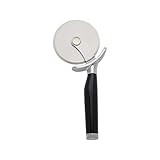


Here is the catch a search for the best ceramic pizza cutter hides. Amazon returned six wheels. Only two of them, the Peterson and the Cestari, list a ceramic blade. The other four are steel. I have kept all six in the guide on purpose, because the steel wheels are often the smarter buy, and you deserve to see why before you spend.
How I scored these six against the ceramic promise
I built the scoring around one question first, then weighted everything else beneath it. My criteria, in order of weight.
- Blade material, heaviest weight. A ceramic pizza cutter that is secretly steel fails on arrival, so a listed ceramic blade came first.
- Cleaning and disassembly. A blade you can detach cleans properly. A fixed wheel traps grease.
- Safety features. A sheath or finger guard decides whether the tool is drawer-safe.
- Weight and control. Lighter wheels are nimble; heavier ones press through thick crust.
Why those weights? Because the search term names the blade, and a blade is the one thing you cannot change after purchase. Everything else is comfort.
Here is what the sorting produced. Two genuine ceramic wheels, the Peterson at 0.51 lb and the Cestari at 0.6 lb. Four steel wheels ranging from the 4.66 oz Blvtoios to the 6.56 oz KitchenAid. Every one of the six is listed as dishwasher safe. Five of the six list either a sheath or a finger guard, which is more consistency than this category usually shows.
Nothing was cut for missing a spec sheet, but thin data did cost points on trust. The Cestari and Blvtoios list weight and colour and little else, so their cases lean on manufacturer claims I can attribute but not verify.
1. Peterson Housewares Ceramic Pizza Cutter — Best overall
The Peterson is the only genuinely ceramic wheel here that pairs a detachable blade with a protective sheath, which is exactly what the search term asks for.
Best for: someone who wants a genuine rust-free ceramic blade Skip it if: you cut thick deep-dish weekly and want more heft
What sets the Peterson apart in this set is simple. It delivers on the keyword. Peterson says the blade is ceramic, and the listing describes an open handle that lets you take the blade out to wash it. Of the two ceramic picks, this is the one that names a sheath, so the blade stays covered in your drawer. It weighs 0.51 lb, the lighter of the two ceramic wheels by a small margin.
Ceramic matters because it does not rust and holds an edge without steel's corrosion. That is the whole appeal, and the Peterson is the cheaper of the two picks that actually offer it, sitting in the entry tier. Peterson also calls the handle soft and the whole tool dishwasher safe, though I would hand-wash any detachable blade to protect the edge.
The trade-off against the steel wheels is heft and pedigree. This is the slowest seller of the six, and the listing is spare on dimensions and warranty. You are buying the blade material, not a spec sheet.
Pros:
- Genuine ceramic blade, rust-free by nature
- Detachable blade for real cleaning access
- Protective sheath for safe drawer storage
- Cheaper of the two ceramic picks
- Light 0.51 lb body for easy control
Cons:
- Slowest seller in this set
- No published dimensions or warranty
- Light weight offers less press on thick crust
2. Cestari Heirloom Ceramic Pizza Cutter — Best premium
The Cestari is the second true ceramic wheel here, pitched as a gift-grade heirloom with a mirror black finish and a detachable blade.

Best for: a home cook buying a gift-grade ceramic cutter Skip it if: you want a published warranty or dimensions
The Cestari is the most expensive pick here, and it earns the premium slot by being one of only two ceramic blades in the group. Cestari says the ceramic stays sharper for longer than steel and will not rust, and that the blade detaches in seconds for a deep clean with no greasy crevices. Those are the manufacturer's words, not a measured result, but they line up with what ceramic does.
It weighs 0.6 lb, making it the heavier of the two ceramic wheels. That small extra mass can help it settle through a crust. The finish is described as mirror black, and the listing leans hard on gift language for weddings and housewarmings, complete with a protective guard.
Against the Peterson, the Cestari costs more and sells far slower, and its listing skips dimensions and any warranty. You pay the premium for the finish and the gift framing, not for extra measurable capability. If ceramic plus presentation is the goal, this is the pick. If ceramic plus value is the goal, the Peterson wins.
Pros:
- Genuine ceramic, rust-free blade
- Heaviest ceramic option at 0.6 lb
- Detachable blade per the maker
- Mirror black finish suits gifting
- Protective guard included
Cons:
- Most expensive pick in the set
- No published warranty or dimensions
- Very low sales pace here
3. KitchenAid Classic Pizza Wheel — Best upgrade
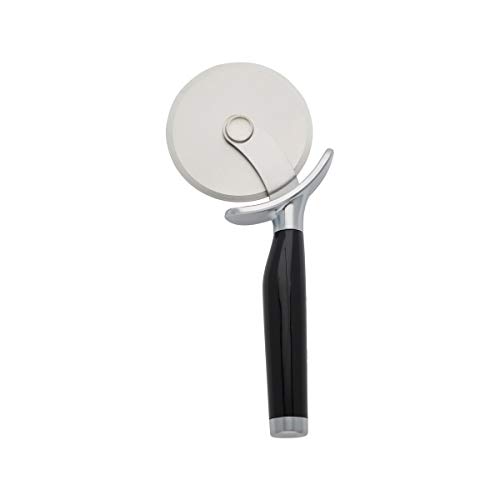
The KitchenAid is the only pick with any stated warranty, and its heft and finger guard make it the most complete steel wheel in the set.
Best for: someone who cuts pizza, pies and cookie dough often Skip it if: rust-free ceramic is your whole reason for shopping
Let me be direct: this is not a ceramic pizza cutter. KitchenAid says the wheel is high-quality premium 430 stainless steel, so it belongs in the steel camp. I include it because it is the most thoroughly specified wheel here and the only one whose listing mentions a warranty at all, covering a 1-year replacement plus a lifetime limited term per the brand.
It is a 9-inch tool measuring 9.06 x 1.18 x 3.94 in and weighing 6.56 oz, the heaviest wheel in the group. That mass presses through crust the way a light ceramic blade cannot. KitchenAid says the built-in finger guard shields hands from both the blade and the heat of a pizza straight from the oven, and calls it dishwasher safe.
The upgrade here is completeness, not blade material. It sells fastest of the six, which tells you buyers reach for it often. The trade-off is obvious: steel can rust and dull where ceramic does not, so if the corrosion-free edge is the point, this misses it entirely.
Pros:
- Only pick with a stated warranty
- Heaviest wheel at 6.56 oz for crust pressure
- Built-in finger guard per KitchenAid
- Fully published dimensions and size
- Fastest-selling of the six
Cons:
- Steel, not ceramic, so it can rust
- Premium price position in this set
- Bulkier body than the light ceramic picks
4. Kitchy Pizza Cutter Wheel — Most versatile
The Kitchy trades a rocking wheel for a large downward-pressure design, letting you cut with vertical force instead of a back-and-forth roll.

Best for: anyone who wants a large wheel and downward pressure Skip it if: your utensil drawer is shallow
The Kitchy is the odd shape in this lineup, and that is its strength. Kitchy says the design uses stable vertical pressure and a large cutting wheel for a controlled cut, so you press straight down rather than roll. It fits in the palm of your hand, per the maker, and comes apart in three steps for the dishwasher.
It weighs 4.89 oz and measures 3 x 12.4 x 11.8 in, which is the tallest footprint here. A protective blade guard keeps it stored safely. This is the second-fastest seller of the six, so the palm-press format clearly clicks for a lot of buyers.
Set against the ceramic picks, the difference is blunt: this is a steel wheel, not ceramic, so the rust-free promise does not apply. It is a mid-tier price, cheaper than the KitchenAid but dearer than the budget wheels. The large frame that gives it leverage is also the reason it eats drawer space. If you cut a lot of thick pies and want force without a rocking motion, though, nothing else here matches its geometry.
Pros:
- Large wheel for downward-pressure cuts
- Disassembles in three steps for cleaning
- Palm-fit grip per the maker
- Protective blade guard included
- Second-fastest seller in the set
Cons:
- Steel wheel, not ceramic
- Tallest footprint, needs drawer room
- Mid-tier price above the budget picks
5. OXO Good Grips Pizza Wheel and Cutter for Non-Stick Pans — Best for families
The OXO is the only wheel here built to be safe on non-stick pans, which matters if your family cuts pizza right in the bakeware.

Best for: households cutting pizza in non-stick pans Skip it if: you want a ceramic blade specifically
The OXO solves a family problem the others ignore. OXO says the tapered blade is sharp enough to cut crusts but safe for non-stick pans and bakeware, so you can slice a sheet-pan pizza without scratching the coating. That is a genuine differentiator in this group.
It weighs 5.12 oz and measures 10.5 x 4.37 x 0.79 in, a flat profile that stores easily. OXO adds a non-stick surface to keep cheese and toppings off the blade, a thumb guard for safety, and a large non-slip handle for grip. Everything points at busy, shared kitchens.
The catch for this guide is the same one that catches the KitchenAid and Kitchy. The OXO is steel, not ceramic, so it does not answer the rust-free ceramic search directly. It sits in the mid price tier and is the fourth-cheapest of the six. If a family wants one tool that plays nicely with non-stick pans and forgiving grips, the OXO is the pick. If the blade material is the whole point, look back at the Peterson.
Pros:
- Blade safe for non-stick pans per OXO
- Non-stick surface sheds cheese and toppings
- Thumb guard for safer cutting
- Flat 0.79 in profile stores easily
- Large non-slip handle
Cons:
- Steel blade, not the ceramic you searched
- Mid-tier price above budget wheels
- No stated warranty
6. Blvtoios Premium Pizza Cutter — Best budget pick
The Blvtoios is the cheapest wheel in the set and the lightest at 4.66 oz, a fine first cutter if you are not tied to ceramic.

Best for: a first cutter for a new kitchen Skip it if: you want detailed published specs before buying
The Blvtoios wins on price, plain and simple. It is the cheapest of the six and the lightest at 4.66 oz, which makes it easy to control for quick cuts. Blvtoios says it is made from high-quality stainless steel and handles thick crusts, sticky dough and gooey cheese, and adds a soft rubber handle with a built-in finger guard.
The maker also calls it versatile, listing pies, pastries, waffles, cheese and cookie dough among its uses, and says the seamless steel construction resists residue for easy rinsing or dishwasher cleaning. For a starter kitchen where you want a working wheel without fuss, that covers the basics.
Two honest limits. First, it is steel, so it carries no ceramic advantage and can rust over time. Second, the listing is thin, giving weight and colour but no dimensions or warranty, so you are buying more on trust than on data. Against the ceramic Peterson, the Blvtoios costs less but drops the rust-free blade that defines this search. As a low-cost everyday steel wheel, though, it is the value entry.
Pros:
- Cheapest pick in the set
- Lightest wheel at 4.66 oz
- Soft rubber handle with finger guard
- Multi-use for pies and dough per maker
- Dishwasher safe
Cons:
- Steel, so no rust-free ceramic edge
- Sparse listing with no dimensions
- No stated warranty
Ceramic or steel: which blade should you buy?
This is the decision that actually splits the field, and it is not about handle comfort. Ceramic or steel changes what you own.
A ceramic blade is a non-metal edge that does not rust and holds sharpness without corroding. That is the entire reason a ceramic pizza cutter exists. Only the Peterson and the Cestari deliver it here. A steel blade is metal, which can rust and dull, but is often heavier and cheaper to make sharp.
- Choose ceramic if rust-free longevity is your priority, or if you want a low-maintenance blade you rarely sharpen.
- Choose steel if you cut thick, dense crusts often and want weight behind the wheel, like the 6.56 oz KitchenAid.
- Choose steel if budget rules, since the cheapest wheel here, the 4.66 oz Blvtoios, is steel.
The mistake buyers make is assuming every result under a ceramic search is ceramic. It is not. Read the blade line before you buy.
How do you clean a pizza cutter without losing a finger?
Cleaning a pizza cutter safely comes down to two features and one habit. The features are a detachable blade and a sheath or guard.
A detachable blade lets you separate the wheel from the handle so grease and dough do not hide in the joint. The Peterson opens its handle to remove the blade, Kitchy says it comes apart in three steps, and Cestari says its blade detaches in seconds. That access is the difference between clean and merely rinsed.
Follow this order:
- Detach the blade if the design allows it.
- Rinse under running water to shift soft residue.
- Wash the blade edge-away from your palm, never toward it.
- Air-dry, especially any steel blade, to fight rust.
- Snap the sheath or guard back on before it goes in the drawer.
All six list dishwasher-safe cleaning, but I hand-wash detachable blades to keep the edge honest.
What the listings leave out
Even a careful read of these six pages leaves gaps, and knowing them protects you.
- Blade sharpness is unquantified. Every maker calls its edge sharp or razor-sharp, but none gives a measure. Treat sharpness claims as claims.
- Ceramic thickness is missing. Neither ceramic pick lists blade thickness, which affects how it handles a lever twist. Cut, do not pry.
- Warranty is mostly absent. Only the KitchenAid mentions coverage, a 1-year replacement plus a lifetime limited term. The other five say nothing, so assume none.
- Handle length varies unstated. Only three picks publish dimensions. The Peterson, Cestari and Blvtoios give weight but no length.
The practical takeaway: the two ceramic wheels are the thinnest on data. You are buying the blade material and the maker's word, so weigh how much a spec sheet matters to you against how much the rust-free edge does.
When a steel wheel is the smarter buy
Not everyone searching for the best ceramic pizza cutter should buy ceramic. Here are the flips, each with a threshold you can check.
- If you cut thick deep-dish or dense sourdough more than once a week, buy steel. The 6.56 oz KitchenAid brings the most press-through weight in the set, and ceramic's light body works against you there.
- If you slice pizza directly in non-stick bakeware, buy the OXO. It is the only wheel here built not to scratch the coating.
- If price is the hard limit, buy the Blvtoios. It is the cheapest of the six, and a working steel wheel beats an unused wish for ceramic.
- If you press straight down instead of rolling, buy the Kitchy. Its large wheel is built for vertical force.
Ceramic wins on rust-free longevity and low maintenance. Steel wins on weight, price and, in the OXO's case, pan safety. Match the tool to your crust, not to the search box.
The verdict
For the entry tier, the Peterson Housewares Ceramic Pizza Cutter is the best ceramic pizza cutter to buy. It is the cheaper of the only two genuine ceramic wheels here, it weighs a nimble 0.51 lb, and it pairs a detachable blade with a sheath so cleaning and storage are both handled. If the rust-free ceramic edge is why you searched, this is the pick that answers it without a premium.
In the premium tier, the Cestari Heirloom takes over. It is the heavier ceramic blade at 0.6 lb, wrapped in a mirror black finish and gift framing, and its exact advantage over the Peterson is presentation, not measured performance. Buy it when the cutter is a gift.
For the upgrade tier, step to steel. The KitchenAid Classic is the only pick with a stated warranty and the heaviest wheel at 6.56 oz, so it presses through crust the ceramic blades cannot. Its cost is the ceramic promise: steel can rust. Pick your tier, then pick your blade.
FAQ
Is a ceramic pizza cutter worth it over steel?
A ceramic pizza cutter is worth it if you value a rust-free blade that holds its edge without corroding. Cestari says ceramic stays sharper longer than steel. The trade-off is weight and price, since ceramic wheels here are lighter and the Peterson and Cestari are the two picks that actually use ceramic. For heavy deep-dish cutting, steel's mass may serve you better.
Which ceramic pizza cutter gives the best value?
The best ceramic pizza cutter value here is the Peterson Housewares wheel. It is the cheaper of the only two genuine ceramic blades in this set, sits in the entry price tier, and still includes a detachable blade plus a protective sheath. At 0.51 lb it is easy to control. The Cestari offers the same ceramic benefit but costs more, trading extra money for a mirror finish and gift presentation rather than added capability.
What blade material does the KitchenAid Classic use?
The KitchenAid Classic uses a blade material the brand describes as high-quality premium 430 stainless steel, not ceramic. That means it can eventually rust or dull where ceramic would not, but the 6.56 oz steel wheel brings more weight through thick crust. It is also the only pick here with a stated warranty, covering a 1-year replacement plus a lifetime limited term per KitchenAid.
Peterson or Cestari: which ceramic cutter should I pick?
Peterson or Cestari comes down to purpose. Both are genuine ceramic, but the Peterson is cheaper, lighter at 0.51 lb, and names a sheath, making it the everyday value pick. The Cestari is heavier at 0.6 lb, carries a mirror black finish, and leans on gift framing, so it is the choice when the cutter is a present. Neither publishes a warranty or full dimensions.
What is the biggest mistake buying a ceramic pizza cutter?
The biggest mistake buying a ceramic pizza cutter is assuming every search result is ceramic. It is not. Of these six wheels, only the Peterson and the Cestari list a ceramic blade; the OXO, Kitchy, KitchenAid and Blvtoios are steel. Always read the blade line before checkout. Otherwise you can pay for a rust-free ceramic edge and receive a stainless steel wheel instead.
Start with the Peterson if the rust-free blade is your reason for shopping, since it is the affordable half of the only two true ceramic wheels in this group and comes ready to store behind a sheath. If your weekly pizza is thick and dense, let the heavier KitchenAid steel wheel do the pressing and accept the rust risk that comes with metal. Either way, the one move that saves you is reading the blade material line before you buy, because a ceramic search does not guarantee a ceramic blade.