Best Backpacking Trowel: NACETURE Aluminum Wins
Five aluminum trowels compared on weight, handle length, and warranty. The NACETURE leads on grip, the BoglerCo on grams, and the PACT on packability.
By Colette SalinasUpdated 14 min read
On this page
- The deciding spec that splits this field
- Best backpacking trowel at a glance
- How I narrowed the field to five trowels
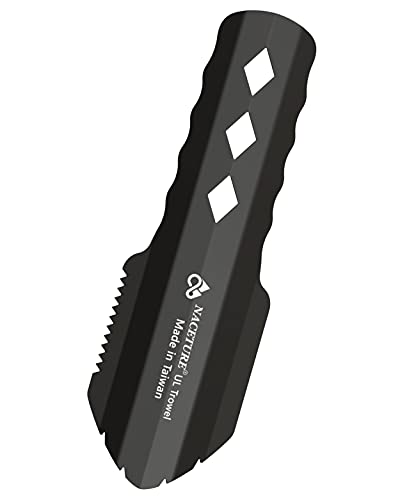
- 1. NACETURE Ultralight Aluminum Backpacking Trowel — Best overall
- 2. BoglerCo Ultralight Backpacking Trowel — Runner-up
- 3. PACT Backpacking Shovel — Best premium
- 4. NACETURE Ultralight Backpacking Trowel Aluminum Shovel — Best for beginners
- 5. PLACHIDAY 3-in-1 Ultralight Backpacking Trowel — Best budget pick
- How deep does a cathole really need to be?
- The spec that actually decides a trowel
- What the listings do not tell you
- When a plastic trowel makes more sense
- Which backpacking trowel wins head-to-head?
- The verdict
- FAQ
The best backpacking trowel is the NACETURE Ultralight Aluminum Backpacking Trowel, a 27 g aluminum tool with a 7.6-inch body and an elongated grip built to lever through roots and hard soil. The BoglerCo Ultralight Backpacking Trowel is the pick when every gram matters: it weighs 13.6 g and carries a lifetime warranty, so gram-counters on softer trails should start there instead.
The deciding spec that splits this field
Weight is what most buyers compare, and it is not what actually decides a backpacking trowel. Every pick here is aluminum. Every pick here fits in a hip-belt pocket. The real split is between blade length and handle leverage on one side, and raw gram savings on the other.
The five picks fall into two clean groups. The NACETURE pair and the PACT are longer-bodied tools between 7.6 and 8 inches, meant to cut a deeper cathole in one pull. The BoglerCo runs 7.25 inches and 13.6 g, less than half the weight of the NACETURE but with less handle to hold. The PLACHIDAY sits in its own corner: the cheapest of the five, with published dimensions that read as a listing error rather than a real size.
That split is the whole decision. If your regular ground is loam or duff, the lightest tool wins. If you camp on clay, rocky sites, or root-heavy pine forest, handle length beats a few grams saved.
Best backpacking trowel at a glance
| Pick | Weight | Length | Price |
|---|---|---|---|
Best overall NACETURE Ultralight Aluminum Backpacking Trowel |
27 g | 7.6 in | Check Price |
| 13.6 g | 7.25 in | Check Price | |
Best premium PACT Backpacking Shovel |
1.28 oz | 8 in | Check Price |
Best for beginners NACETURE Ultralight Backpacking Trowel Aluminum Shovel |
27 g | 7.6 in | Check Price |
Best budget pick PLACHIDAY 3-in-1 Ultralight Backpacking Trowel |
1.6 oz | not clearly listed | Check Price |


How I narrowed the field to five trowels
I cut picks for three reasons before ranking anything.
- No published weight or dimensions. A trowel that will not tell you how many grams it adds to your pack does not belong in an ultralight roundup.
- Steel or heavy-duty entrenching tools. Fine for car camping, wrong category for the best backpacking trowel.
- Plastic-only trowels. They work in soft dirt, but the picks here are compared on aluminum performance in hard ground.
What survived is five aluminum trowels between roughly 13 and 45 grams, all sold as ultralight backpacking gear, all under 8 inches long. Four ship as a single unit from a single seller. The NACETURE black model is the only pick with more than one seller listing it, at two.
The one anomaly is the PLACHIDAY. Its listing gives a weight of 1.6 oz, which is plausible, but its dimensions read as 1 x 0.1 x 0.1 in, which is not a real trowel size. I kept it as the cheapest option in the set and treated the size figure with caution.
1. NACETURE Ultralight Aluminum Backpacking Trowel — Best overall
A 27 g aluminum trowel with a longer grip that levers through hard soil better than anything else in this set.
Best for: hikers digging in root-laced or hard-packed soil Skip it if: you count every gram and camp only on soft duff
The NACETURE wins because it gets the geometry right. At 7.6 x 0.7 x 2.8 in and 27 g, it gives you enough handle to grip with a full hand and enough blade to move real dirt on one stroke. NACETURE describes the grip as ergonomic and longer than a standard trowel, and the listing points to hard ground, roots and rocky soil as its target use. That matches what you actually hit when the flat sites are taken and you are digging behind a tree at dusk.
Two things separate it from the near-identical orange NACETURE below. This black model has a lower sales rank in the category, at 3,291, and it is the only pick in the set with more than one seller. Both are small signals, but they are the kind of set-level differences worth noting when two listings are otherwise twins.
The trade-off is honest. The BoglerCo weighs less than half as much. If your trail is dry pine duff and your pack weight is measured in ounces, you will not miss the extra 13 grams.
Pros:
- Longer handle for leverage in hard soil
- 7.6-inch body cuts a full cathole in fewer strokes
- Lightest longer-body pick here at 27 g
- Two sellers listed, the only pick with more than one
Cons:
- Roughly twice the weight of the BoglerCo
- No stated warranty
- Handle length adds bulk in a hip-belt pocket
2. BoglerCo Ultralight Backpacking Trowel — Runner-up
A 13.6 g aluminum trowel with a lifetime warranty, and the only pick here made in the USA per the listing.

Best for: gram-counting thru-hikers on softer trails Skip it if: you need a longer handle for leverage in clay
The BoglerCo is the answer to a simple question: what is the lightest working trowel here? At 13.6 g and 7.25 inches, it saves you 13 grams over either NACETURE. BoglerCo says it weighs less than three nickels, which is the kind of number that matters when your base weight is already stripped. The listing also claims an end cap that lets you push with a full palm without the handle digging in, which is the classic weak point of thin aluminum trowels.
It is the only pick in this set with a published warranty, listed as a lifetime warranty, and the only one whose listing states it is made in the USA. Those are set-level facts, not testing claims, and they matter when you are choosing between five otherwise similar tools.
The trade-off is handle length. At 7.25 inches, it is the shortest of the four picks with a real published size. In clay or through roots, you feel that. It sits at the top of the price band in this set, which is the second real cost against it.
Pros:
- Lightest pick here at 13.6 g
- Lifetime warranty, the only one in the set
- Listing states made in the USA
- End cap for full-palm pressure
Cons:
- Shortest published length at 7.25 in
- Premium price position for the smallest tool
- Less leverage on root-laced ground
3. PACT Backpacking Shovel — Best premium
An 8-inch extruded aluminum trowel at 1.28 oz, the longest blade in the set for a low weight.
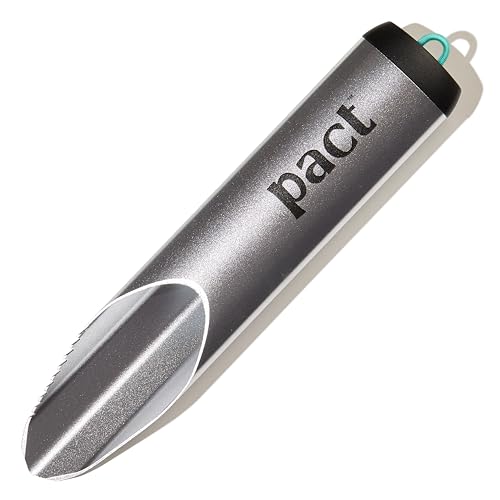
Best for: backpackers who want a longer blade with low weight Skip it if: you would rather spend less for the same job
The PACT is the longest tool here at 8 inches, and it weighs 1.28 oz. That combination is what you pay for. PACT describes the body as extruded aluminum meant to hold shape against roots, clay and rocks, and pitches it as a multitool that can double as a tent stake or cut a tarp strap in a pinch. Read that last part as marketing, not evidence, but the length and weight are real published figures and they are what put this pick above the BoglerCo on leverage.
Set-wise, it is the most expensive pick here and the slowest seller of the five, at a sales rank of 36,649. Neither is a knock on the tool itself. It reads as a niche pick that sells to people who already know what they want.
The trade-off is money for grams. You are paying the highest position in this set to get an 8-inch tool that weighs less than a 7.6-inch NACETURE. If handle length matters more to you than shaving 20 grams, the overall winner is the better buy.
Pros:
- Longest published body at 8 in
- 1.28 oz keeps it in ultralight territory
- Extruded aluminum construction per the listing
- Compact 1 x 1.17 in profile in the pack
Cons:
- Most expensive pick in the set
- Slowest seller of the five
- No stated warranty
- Multitool claims are listing copy, not evidence
4. NACETURE Ultralight Backpacking Trowel Aluminum Shovel — Best for beginners
The orange twin of the overall winner, easier to spot in leaves and priced mid-range for this set.

Best for: first-time backpackers building out a starter kit Skip it if: you already own a stronger aluminum trowel
This is the same 27 g, 7.6-inch body as the overall winner, in orange instead of black. Same feature copy from NACETURE about sharp edges, root cutting and an ergonomic longer handle. Same category, same manufacturer. The only meaningful difference in the data is colour, price position and how well it sells.
For a first trowel, the orange makes sense. Dropping a black trowel in pine needles at dusk is a real problem. A high-visibility handle is one less thing to worry about when you are still working out your camp routine.
The trade-off is that it sits at a mid price position in this set for the same tool that the overall winner delivers at an entry price. Its sales rank is 13,571, well behind the black version at 3,291, which is a set-level signal that buyers who compare the two tend to pick the cheaper one. If you already own an aluminum trowel of any kind, you are not the buyer for this. It earns its spot as a beginner recommendation on colour and simplicity, not on any specification the black twin does not share.
Pros:
- Bright orange handle, easier to spot in leaves
- Same 7.6-inch body as the overall winner
- Longer handle for leverage
- Simple single-piece aluminum build
Cons:
- Priced above the black NACETURE for the same tool
- No stated warranty
- Sells more slowly than the black twin
5. PLACHIDAY 3-in-1 Ultralight Backpacking Trowel — Best budget pick
The cheapest of the five, an orange aluminum trowel at 1.6 oz with a non-slip ergonomic handle.

Best for: casual campers who want the cheapest working option Skip it if: you need published dimensions you can trust
The PLACHIDAY is the entry-level pick here and the cheapest of the five. PLACHIDAY calls it a 3-in-1 for hole digging, waste disposal and light excavation, and says the ergonomic non-slip handle keeps it comfortable in cold hands. The published weight is 1.6 oz, which is heavier than the BoglerCo but still well inside ultralight territory.
Here is the honest problem. The listing gives its dimensions as 1 x 0.1 x 0.1 in, which cannot be right for a working trowel. That is either a data-entry error on the size field or a genuinely tiny tool. I would treat that as a reason to check the size directly with the seller before you rely on it for anything more than car-camp use. Only one seller lists it, so there is no cross-check inside Amazon.
Against the rest of the set, this is the pick you buy on price and colour, with a warning attached. If you want a trusted lightweight tool for real trail use, the BoglerCo and the two NACETURE picks are all safer choices.
Pros:
- Cheapest of the five
- High-visibility orange handle
- Non-slip grip per the listing
- 1.6 oz keeps it packable
Cons:
- Published dimensions look wrong
- Only one seller lists it
- No stated warranty
- Heaviest pick of the four with published weights
How deep does a cathole really need to be?
Leave No Trace guidance for a cathole is 6 to 8 inches deep and 4 to 6 inches across, at least 200 feet from water, camp and trail. That is the number your trowel has to hit, and it is why blade length matters.
A trowel with a 7.25-inch body, like the BoglerCo, will reach that depth in soft ground with the handle almost buried. A 7.6-inch NACETURE gives you a bit more purchase. The 8-inch PACT gives you the most, which is why longer bodies win on hard soil: you can lever without your knuckles hitting dirt.
If you are only ever camping on established sites with soft topsoil, blade length is close to irrelevant. The moment you are digging through pine roots or clay, the missing inch shows up as three or four extra strokes and a sore hand.
The spec that actually decides a trowel
Most guides pit trowels against each other on grams. That works only if every option digs the same hole in the same time, which they do not.
The real spec to sort on:
- Blade length. How close you can get to a 6 to 8 inch cathole in one stroke.
- Handle length and shape. Whether you can push with a palm or only pinch with fingers.
- Weight, but as a tie-breaker. Between two trowels that dig the same hole, the lighter one wins. Between a trowel that reaches depth and one that does not, weight is not the deciding number.
Applied to this set, that ordering puts the NACETURE first for most trails, the PACT first when you want the longest blade at low weight, and the BoglerCo first only when weight overrides everything else.
What the listings do not tell you
A few things every one of these listings leaves out, and that you should know before you buy.
- Edge sharpness after use. Aluminum trowels dull. None of the listings state edge hardness or coating.
- Grip in cold weather. Bare aluminum is cold. Only PLACHIDAY mentions non-slip, and it is not a thermal claim.
- Sheath or cover. None of the picks state that a sheath is included. A sharp aluminum edge in a hip pocket next to a phone screen is a problem.
- Repair or replacement details. Only the BoglerCo publishes a warranty. The other four say nothing about what happens if the tool bends on a rock.
None of this is a reason to avoid aluminum. It is a reason to expect an aluminum trowel to be a five-year tool, not a lifetime one, unless the maker says otherwise in writing.
When a plastic trowel makes more sense
Aluminum is not the only answer. A plastic trowel is the better buy in three cases:
- Alpine and coastal ground where digging is easy. Sand, duff and glacial silt do not need aluminum.
- When you want a serrated edge. Plastic trowels often come with a saw-tooth edge that helps in loose roots. None of these aluminum picks list a serration.
- When you fly with your pack and want to avoid awkward questions. A blunt plastic tool is one less item at a security check.
If any of those describe your trips, you can safely skip this whole aluminum set. If you dig in clay, rocky soil, hard-packed dirt or root-laced forest floor, come back to the NACETURE.
Which backpacking trowel wins head-to-head?
The real comparison is the NACETURE against the BoglerCo. They are the two picks most buyers will land on.
The NACETURE gives you 0.35 more inches of body, an ergonomic longer handle, and the lowest price position of any pick with a real published size. The BoglerCo gives you a 13.4 g weight saving, a lifetime warranty and a listing that states US manufacture. That is the trade in one sentence.
The cutoff is your ground. If your regular trail is soft, take the BoglerCo. If it is not, take the NACETURE.
The verdict
The best backpacking trowel for most hikers is the NACETURE Ultralight Aluminum Backpacking Trowel. Its 27 g weight is well inside ultralight territory, its 7.6-inch body reaches cathole depth in one clean stroke, and its longer handle gives you real leverage in the kind of hard, root-laced ground that pushes shorter tools past their limit. Two sellers list it, which is the only pick in this set that can say so, and it sits at an entry price position.
The BoglerCo is the pick when weight overrides everything else. It weighs 13.6 g, less than half the NACETURE, and it is the only tool in the set with a stated lifetime warranty. On soft trails, that combination is hard to argue with.
The PACT wins on blade length. If you want an 8-inch body at 1.28 oz and you are willing to pay the highest position in this set, it is the specialist choice. If a longer body is not worth the money, the NACETURE beats it comfortably.
FAQ
Is a backpacking trowel worth buying?
A backpacking trowel is worth buying for anyone camping outside established sites with a toilet. Leave No Trace guidance calls for a 6 to 8 inch cathole, and no stick, tent stake or boot heel gets you there reliably in hard ground. At 13 to 45 grams, a trowel like the BoglerCo or the NACETURE adds almost nothing to your pack and solves a problem that has no workaround.
What is the lightest backpacking trowel here?
The lightest backpacking trowel in this set is the BoglerCo, at a published weight of 13.6 g. That is less than half the 27 g weight of either NACETURE, and lighter than the 1.28 oz PACT or the 1.6 oz PLACHIDAY. If gram counting is the whole point of your kit, the BoglerCo wins by a clear margin.
Which is better, the NACETURE or the BoglerCo?
Which is better between the NACETURE and the BoglerCo depends on your ground. The NACETURE is longer at 7.6 in, has a longer handle for leverage, and sits at an entry price. The BoglerCo is lighter at 13.6 g and carries a lifetime warranty. Pick NACETURE for hard or root-laced soil, pick BoglerCo when weight overrides everything else.
Do aluminum backpacking trowels bend on rocks?
Aluminum backpacking trowels can bend if you pry against a rock instead of digging around it. All five picks here are aluminum, and only the BoglerCo publishes a lifetime warranty. The PACT listing describes its extruded aluminum body as built to hold shape against roots and clay. Treat any aluminum trowel as a digging tool, not a pry bar, and it will last.
What size cathole should a backpacking trowel dig?
The size cathole a backpacking trowel needs to dig is 6 to 8 inches deep and 4 to 6 inches across, per Leave No Trace guidance, at least 200 feet from water, camp and trails. That is why blade length matters more than weight for most buyers. A 7.25 to 8 inch aluminum body, like the picks here, reaches that depth in one clean stroke on average soil.
Start with the NACETURE if you want one trowel to cover every trail you are likely to walk this year. It reaches cathole depth in one stroke, its longer handle keeps your knuckles out of the dirt in hard soil, and it sits at an entry price position in a set where the premium options ask for more money without doing more work. Take the BoglerCo instead only if you already know your ground is soft and every gram in your pack has been justified twice. Either way, add a small ziplock or a scrap of cordura as a makeshift sheath, because no listing here promises one.